Vol. 9 No. 1 (2025): Jurnal Ilmu Perilaku
Greetings to all of us,
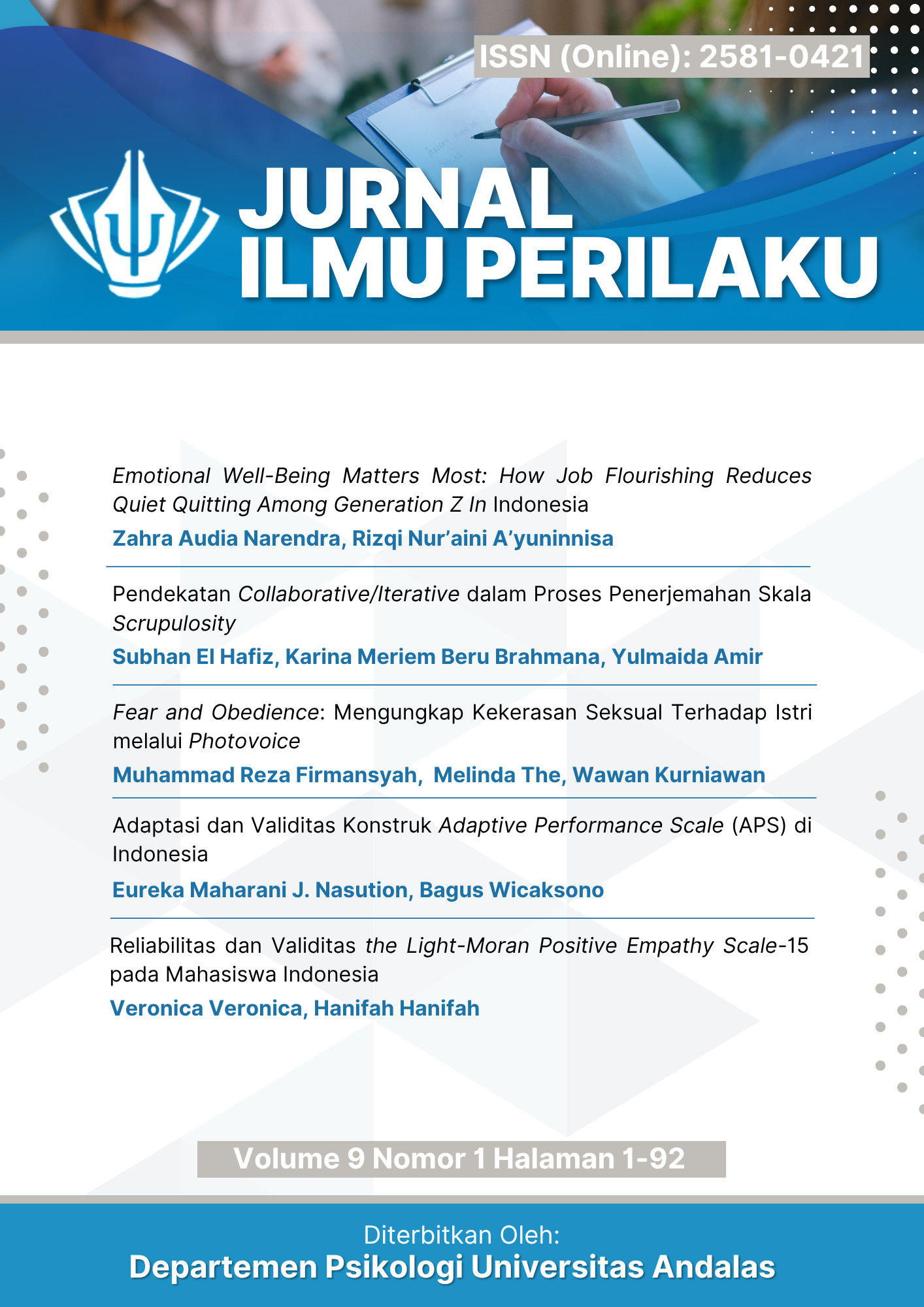
In this volume, we are delighted to bring forth a diverse array of articles encompassing an expansive spectrum of psychological inquiry. As always, our goal remains to foster an environment where scholarly exploration thrives, generating insights that contribute to local and global understandings of human behavior and experience. This new edition comprises five articles, each offering valuable contributions to psychology. We extend our heartfelt appreciation to the diligent researchers whose dedication has enriched this edition with thought-provoking findings and discussions.
The first article examined the relationship between job flourishing and quiet quitting tendency among Generation Z employees in Indonesia. The results revealed a significant negative association between job flourishing and quiet quitting. Among the dimensions of job flourishing, emotional well-being was found to have the most substantial effect on reducing the quiet quitting tendency. The second article explained collaborative/ iterative as an alternative approach to translate the Penn Inventory of Scrupulosity (PIOS-R), which is used to recognize Obsessive-compulsive disorder symptoms with a religious theme. The results show that the scale's translation is not different from the original version; specifically, the PIOS-R score between the two versions of the scale, English and Indonesian, has no statistical difference, and supports this approach, providing a good translation.
The third article focuses on wives experiencing domestic sexual violence who choose not to pursue legal action using the photovoice method. The findings reveal four categories of sexual violence: physical/non-physical sexual harassment, sexual torture, and marital rape. Wives choose to stay due to fears concerning their children's future and the belief in the "obedient wife" ideal. Furthermore, the fourth article discusses the validity and reliability of the Adaptive Performance Scale (APS), a tool for measuring individual adaptive performance within an organizational context. Confirmatory Factor Analysis (CFA) was utilized to evaluate the measurement model. The results demonstrated that the APS fulfilled the model fit criteria as a multidimensional construct comprising five factors. The APS also demonstrated good reliability.
Lastly, the fifth and final article is also about adapting the psychological scale. In this study, the Indonesian version of Light-Moran PES-15 for measuring positive emotional responses to others' emotional expressions is tested for validity and reliability using descriptive statistics, Cronbach's alpha, corrected item-total correlation, and CFA. The result shows this instrument can be trusted and can measure positive empathy with the Indonesian student population.
The entire Editorial Board of Jurnal Ilmu Perilaku (JIP) would like to express our gratitude to all partners who have taken the time to help us. Through their willingness and volunteerism to review the manuscript, JIP continues to publish and evolve as a platform for intellectual growth.
To all readers, we hope our published articles can provide valuable new insights and inspiration. May the knowledge shared within these pages stimulate dialogue, inspire new avenues of research, and contribute to the ongoing advancement of psychological science. In addition, we also invite all readers to publish their best manuscripts in our journal. We hope that our small endeavor can benefit and contribute to the development of psychology in Indonesia. Please enjoy the read!
Greetings,
Editorial Board of JIP
Published:
2025-06-30